
Wunder Mobility changelog
Release 09-2026 - Advanced Fleet Insights & New automated Workflows
Highlights
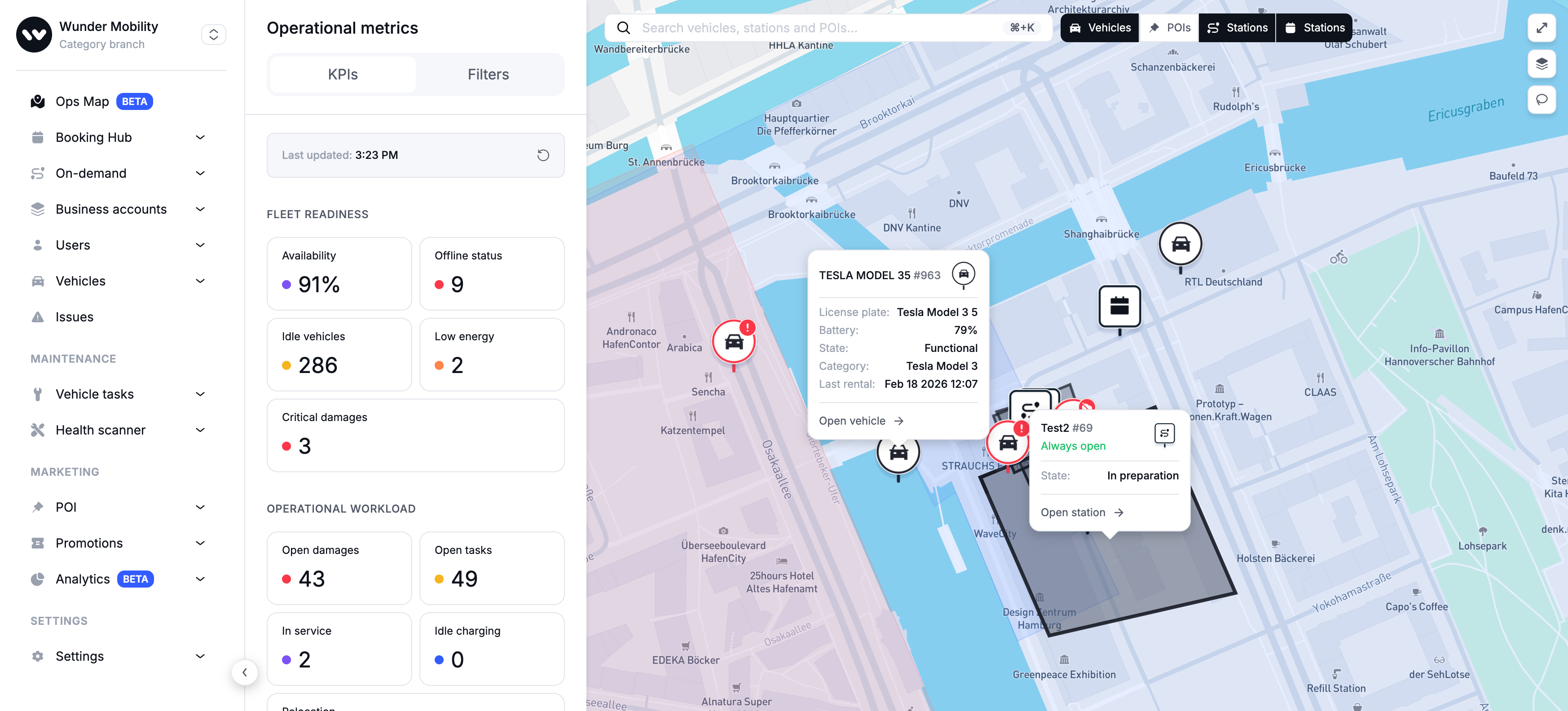
Operations Map Hover Insights: Operators can now quickly scan vehicle status, battery levels, and area layer configurations simply by hovering over map pins and zones. This reduces manual clicks and speeds up fleet triage, allowing teams to understand context at a glance.
Proactive Charging Health Alerts: The system now automatically notifies operators if a vehicle fails to start charging after being plugged in, or if an active session is interrupted prematurely. This enables street teams to fix defective stations or poorly seated cables before they impact fleet availability.
Mobile App
General
Error Message UX Improvements: Error codes are now relegated to secondary text within parentheses, ensuring end-users first see a clear, human-readable message during failures.
Web App
Booking
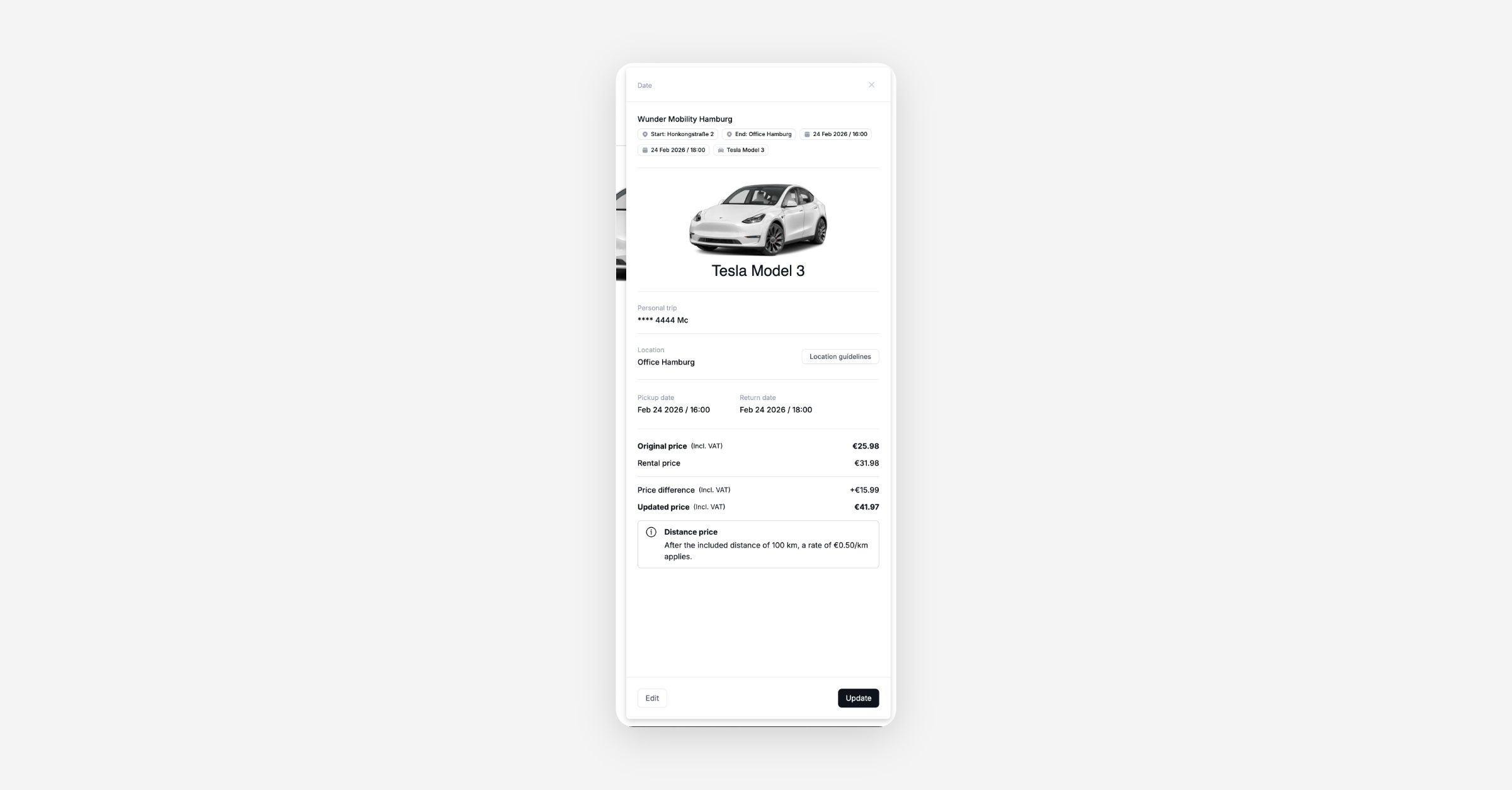
Transparent Price Edits: When editing a booking, users now see a clear comparison of the original estimated price and the updated total before saving the changes.
New Dashboard
Booking
Addition Persistence Fix: Fixed a bug where internally selected additions, like security packages, would disappear from a booking after it was saved and reopened.
General
Operations Map Hover Details: Operators can now view key details directly when hovering over vehicles, stations, POIs, and all area types on the Ops Map, including a quick link to open and manage the selected item.
This improves map scan-ability, makes area rules (e.g. surcharge or no-parking zones) more transparent, and enables faster operational decisions without navigating away from the map. Visual behavior was also refined to prevent conflicting hover states and improve layer visibility.
Improved bulk actions and filters: Removed non-actionable filters (e.g. “Unknown battery level”) and added a Back button to the bulk action flow so operators can return to the action selection step without restarting. This reduces unnecessary clicks and makes map-based bulk operations quicker and easier to manage.
POI Icon Optionality: Fixed a UI inconsistency where the icon selection dropdown during POI category creation incorrectly displayed as an optional field.
Task Media Visibility: A limitation was improved to guarantee, that all media files attached to a vehicle damage report are now fully visible directly within the damage side panel.
Task Template UI Fix: Fixed a bug where the create button would remain disabled after selecting a task template until the user clicked elsewhere in the modal.
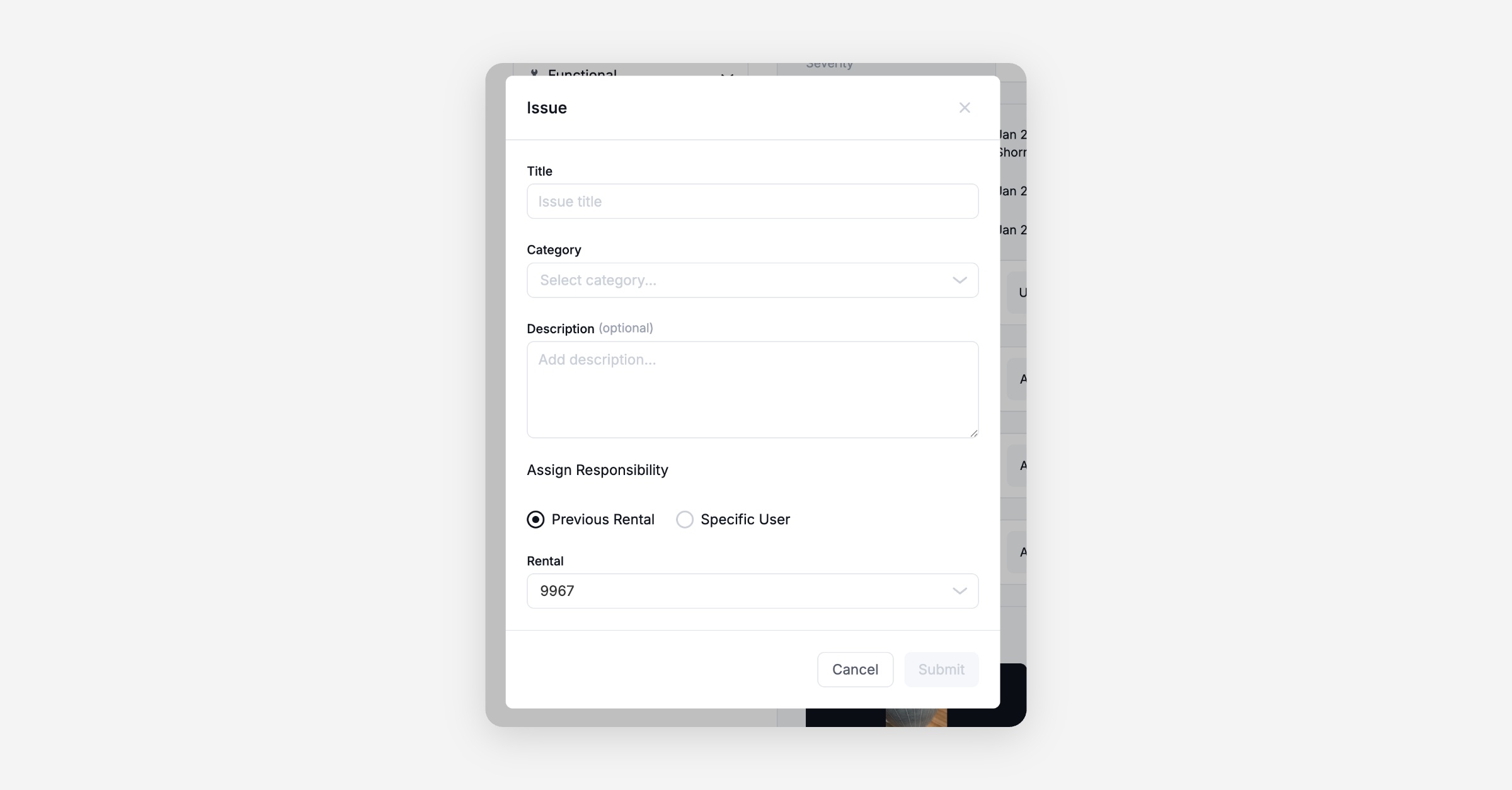
Smarter Issue Creation from Damages: When creating an issue directly from a damage report, the system now provides the ability to link a specific user or rental if one is not already tied to the record. This ensures that every issue has a clear debtor assigned during the creation process, preventing invoicing errors.
Platform
General
Charging Failure Alerts: Operators can now automatically detect failed charging sessions before they impact fleet availability. Two separate email notifications were introduced: Interrupted charging, triggered when a vehicle stops charging prematurely while still plugged in, and Never-started charging, triggered when a vehicle remains plugged in but does not begin charging within a configurable time threshold.
This gives operators early visibility into charging station faults, loose connections, or power issues, allowing them to resolve problems quickly, prevent low-SOC vehicles, and reduce manual monitoring of charging vehicles.
API
General
Hardware API Alignments: Aligned the saddle and tailbox actions in the Hardware API to match the published OpenAPI documentation paths.
OpenAPI Documentation Updates: Added detailed specifications and configuration instructions for repeatable export webhooks to the public OpenAPI docs.