
Wunder Mobility changelog
Mobile Release - 3.12.1
Mobile - User
Requires the latest app version. Contact your Customer Success Manager for details.
General
Refined vehicle modal UI: The vehicle modal UI has been updated with a clearer information layout, including vehicle features, insurance selection, and many more functional and user experience improvements – helping riders make faster, better-informed decisions at the vehicle. This feature is currently in beta preview and is not enabled by default. For early access please get in touch with us.
Booking
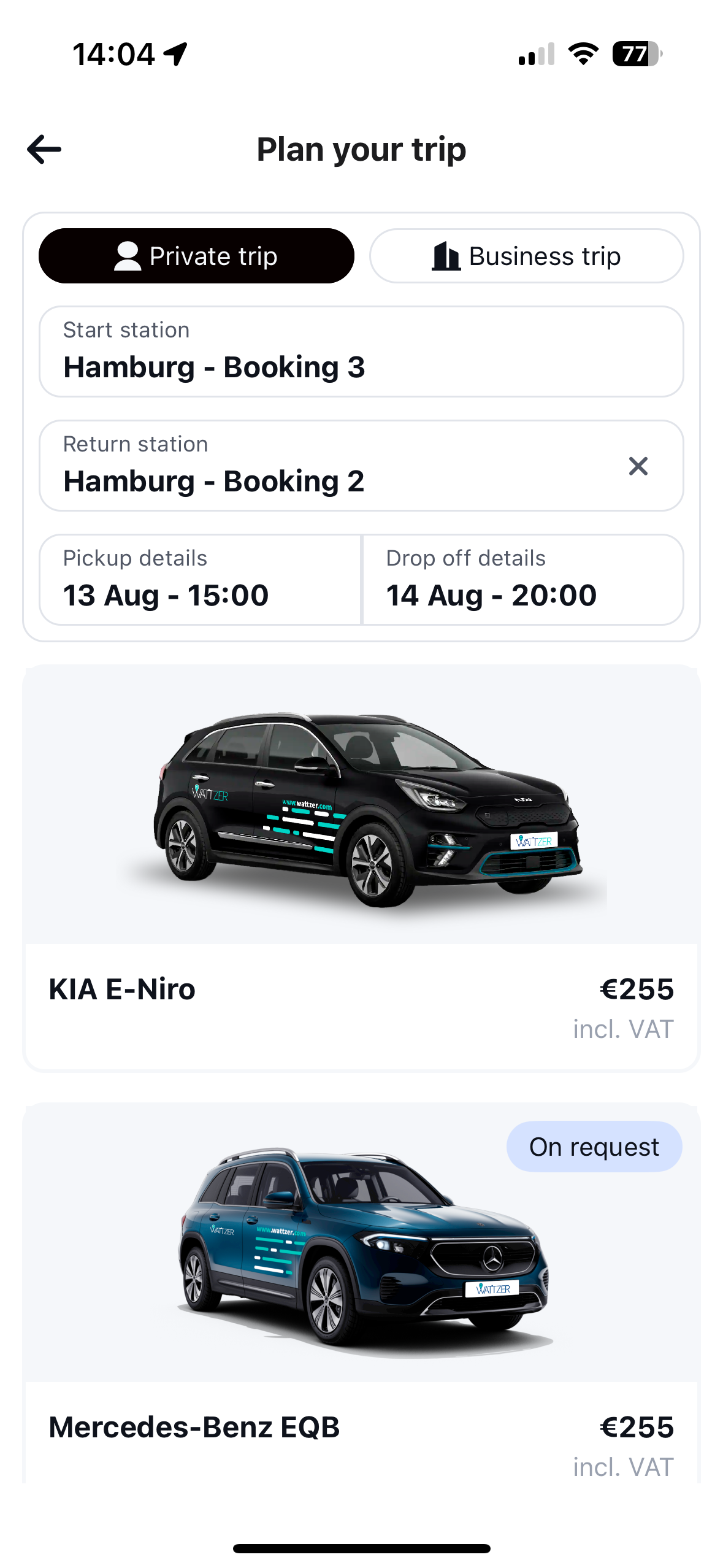
The mobile booking flow has been fully redesigned: fewer clicks, a more intuitive layout, and a smoother, faster path to a confirmed booking. Behind the scenes, the flow now respects every condition an operator can set on a station, including station capacity, overbooking, and booking requests, so end users always see the most accurate availability. And when what they want is not available, the flow offers clear alternatives to keep them moving toward a booking rather than a dead stop. The goal is straightforward: more of the users who start creating a booking actually complete one, which means more bookings and better fleet utilization with no additional operational effort.
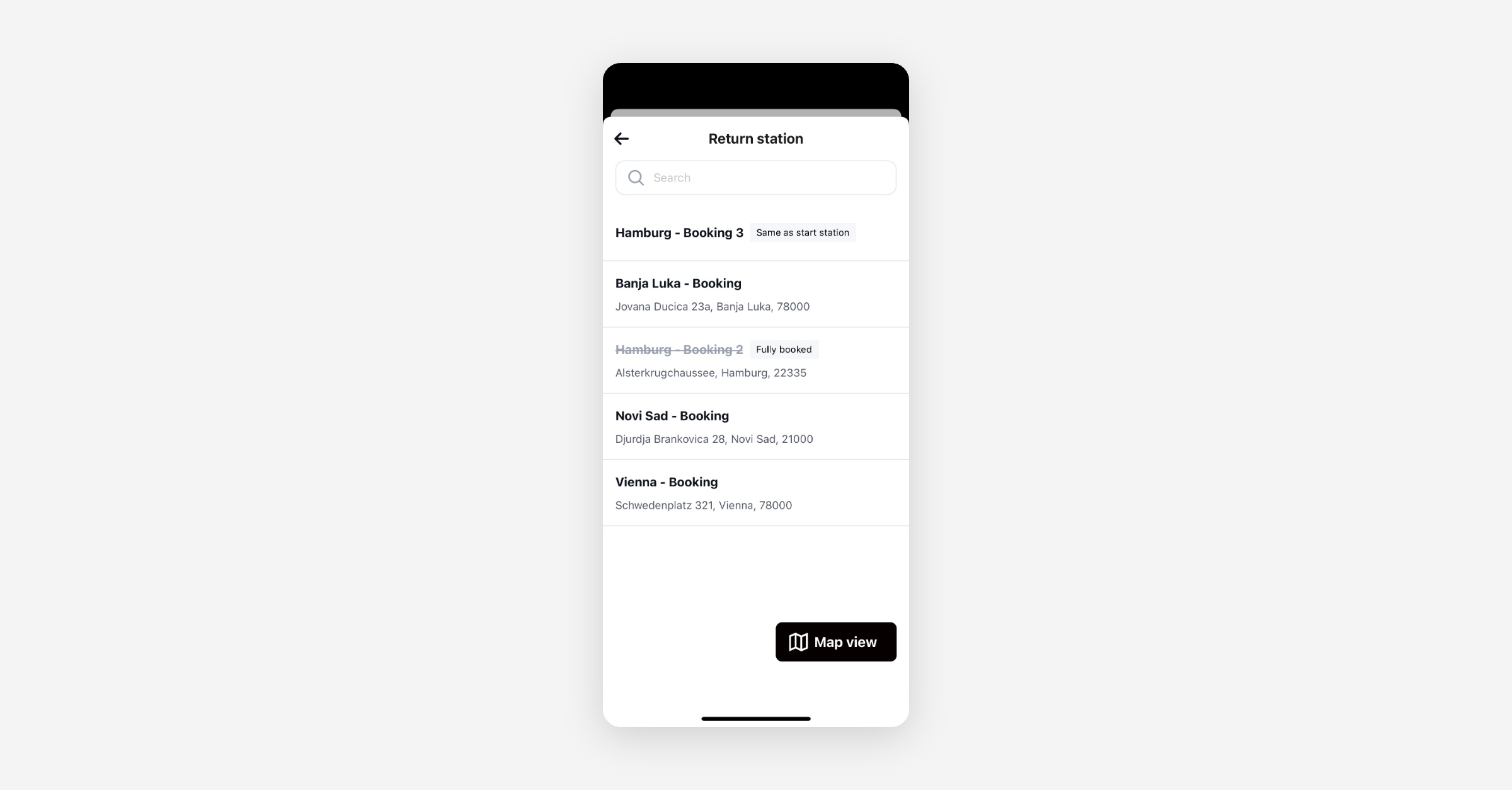
Stronger support for A-to-B bookings: A-to-B journeys, where an end user picks up at one station and drops off at another, are now much better supported. The flow accounts for how vehicles move across your fleet, so the drop-off stations and times it offers reflect the real capacity and overbooking limits at the destination station. The result is more accurate A-to-B availability and fewer offers that cannot actually be fulfilled.
Alternatives when your chosen details have no availability: When the selected station or time slot has nothing free, the app suggests nearby stations and alternative time slots, so end users are guided to a completed booking instead of hitting a dead end. This is the core lever for increasing completed bookings.
Requested bookings only when they are genuinely needed. Previously the option to request a booking was shown even when the chosen time was actually available, nudging users to request when they could simply have booked. Now a request is offered only once the system confirms the user's selection is truly unavailable, so end users book directly whenever they can, and still request their original choice when they cannot. This works alongside the alternatives above.
Station capacity enforcement. When enabled, the flow stops end users from booking a station past its configured maximum, and capacity-limited stations are held back from the suggested alternatives.
Overbooking support. For operators who allow overbooking, the flow can accept bookings beyond the vehicles physically present at a station, up to the allowance you configure. Two modes are supported: a guaranteed minimum capacity (a floor), or extra slots added on top of the physical inventory (a boost). The operational lead time you set gives your team the buffer to reposition a vehicle in time, so bookings that would start too soon to reposition are not offered.
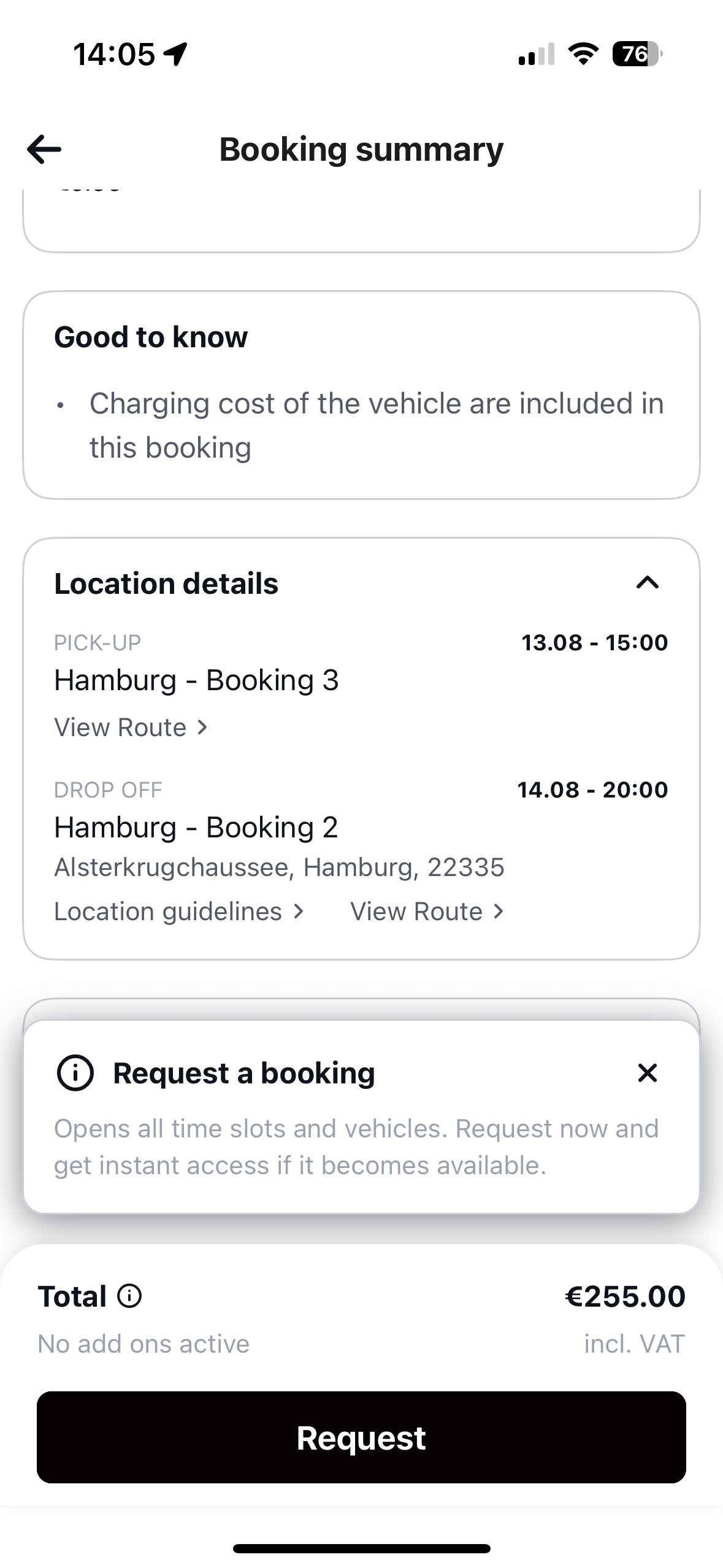
A clearer booking summary before confirmation. The redesigned summary screen gives end users a clear overview before they confirm, including pricing details and booking conditions. Operators can also switch on an optional information section to surface their own short messages, for example to make clear that charging is included in the price, so end users see the details that matter at the moment of confirmation. This section is a setting operators choose to enable.
Editing and extending existing bookings. End users can edit an upcoming booking or extend an upcoming or active ride directly from their bookings. Editing supports changing the times, vehicle category, and return station; extending adjusts the end time. Note that the alternatives feature applies to creating a new booking only: if a chosen station or time has no availability while editing or extending, the app shows an unavailable message rather than suggesting alternatives.
More reliable station map: Stations now render dependably across all zoom levels on the app map, so riders no longer see stations disappear as they zoom in and out.